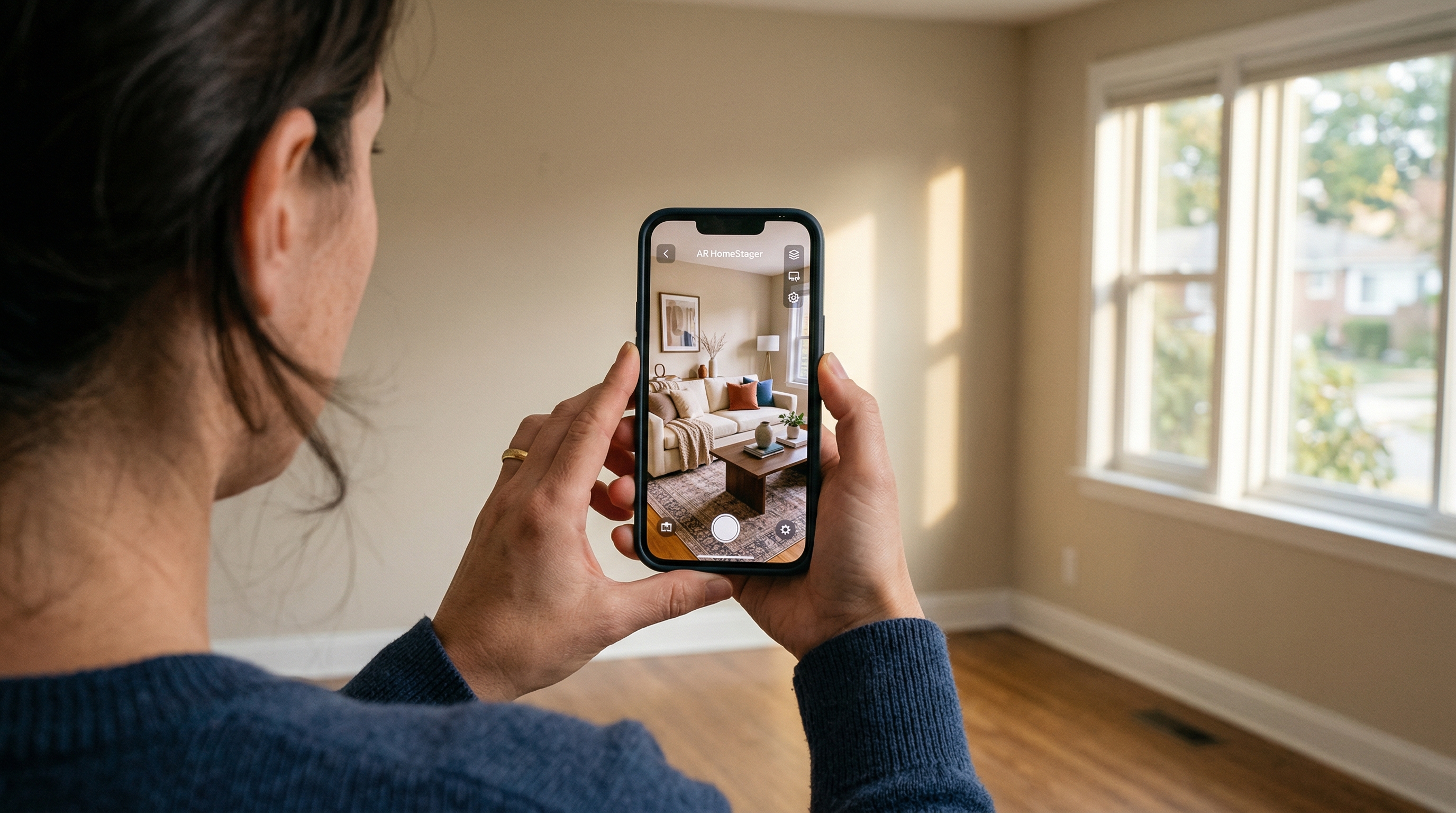
AI Home Staging for FSBO Sellers: Stage Your Home Without Hiring Anyone
Selling your own home is one of those things that sounds straightforward until you're actually doing it. You saved yourself the 5-6% agent commission — nice — but now you're the marketer, the negotiator, the scheduler, and the photographer. You're figuring out how to price it, where to list it, and how to make it look good enough that buyers actually click on your listing instead of the 47 others in your zip code.
Here's the thing about listing photos: they matter way more than most sellers realize. The National Association of Realtors says 97% of buyers start their search online. Your photos are your first impression, your storefront, your handshake. Bad photos mean fewer clicks, fewer showings, and a lower sale price.
And empty rooms? They photograph terribly. Your beautiful living room that feels spacious in person looks like a beige box online. Rooms without furniture appear smaller in photos, and buyers struggle to picture where their stuff would go. A 2023 NAR study found that staged homes sold for 5-25% more than unstaged ones.
That's where virtual staging comes in, and it's probably the single best thing you can spend money on as a FSBO seller.
What even is virtual staging?
Virtual staging means taking a photo of your empty room and using software to add furniture and decor to the image digitally. The result looks like a professionally designed room, but none of the furniture is real. It only exists in the photo.
Old-school virtual staging required hiring a designer who'd manually photoshop furniture into your photos. That cost $100-300 per image and took a few days. Modern AI-powered staging does the same thing automatically for a fraction of the cost. At Stagrr, you upload a photo, pick a style you like, and get back three different staged versions for a dollar. The whole process takes about a minute.
No designers to hire. No furniture to rent. No waiting.
Do I really need staging if I'm selling without an agent?
Short answer: yes. Longer answer: especially yes.
When an agent lists a home, they've got a network, a brand, and marketing muscle behind the listing. They can get away with mediocre photos because they're driving traffic through other channels — open houses, agent networks, email blasts.
You don't have that. Your listing lives or dies by how it performs on Zillow, Redfin, Realtor.com, and Facebook Marketplace. Those are visual platforms. Buyers are scrolling fast, and you've got maybe two seconds to make them stop and tap on your listing.
Staged photos stop the scroll. Empty room photos don't. That's not opinion — Redfin's own data from 2023 showed that listings with staged photos received 37% more saves and 25% more showing requests than identical listings with empty room photos.
For the cost of a coffee, you can give your listing a fighting chance.
How do I take good photos with just my phone?
You don't need a professional camera. A recent iPhone or Android phone takes perfectly good real estate photos if you follow a few rules.
Shoot during the day. Open every blind, turn on every light. Real estate photography is all about light, and dark photos make rooms feel small and uninviting. The best time to shoot is mid-morning or mid-afternoon when you get soft natural light without harsh direct sun.
Use the wide-angle lens if your phone has one. On iPhones, that's the 0.5x option. On Samsung, it's the ultra-wide. This makes rooms look more spacious and lets you capture more of the space in a single shot.
Hold the phone at chest height, not eye height. And keep it level — tilted photos make walls look like they're falling over, and that looks unprofessional. Some phones have a built-in level indicator in the camera app. Use it.
Shoot from doorways and corners. You want to capture two or three walls in each shot to give buyers a sense of the room's layout. Standing in the middle of a room and shooting one wall is boring. Corners give depth and context.
Clean up before you shoot. I know, obvious. But I'm talking about the stuff you stop seeing after living somewhere for years: the pile of shoes by the door, the magnet collection on the fridge, the toilet brush next to the toilet. Remove anything personal or cluttered. You want rooms to look clean and neutral.
Take way more photos than you think you need. Shoot each room from 3-4 angles. You'll pick the best one later, and having options is better than having to reshoot.
Which rooms should I stage first?
Not every room needs staging. If your budget is tight (and as a FSBO seller, you're probably watching costs), prioritize the rooms that buyers care about most.
The living room is number one. Always stage this first. It's usually the hero image of your listing — the first photo buyers see. A beautifully staged living room makes people click through to see the rest.
The primary bedroom is second. Buyers want to imagine waking up in their new home, and an empty bedroom with just carpet and walls doesn't inspire that.
The kitchen is third, but only if it's empty or very dated. If your kitchen still has appliances and looks decent, skip staging and just photograph it clean and well-lit. AI staging works best on empty or mostly empty rooms.
Dining room, home office, and kids' rooms are nice-to-haves. Stage them if you have the budget, but the living room and primary bedroom alone will make a dramatic difference.
At a dollar per room for three styled variations, staging your top three rooms costs three bucks. Not a typo.
What style should I pick?
This depends on your home and your buyer. But if you're not sure, Warm Contemporary is the safest bet. It's that look you see in nice hotels — clean but cozy, neutral colors, comfortable-looking furniture. It appeals to pretty much everyone.
If your home is near the coast or has a light, airy feel, try Coastal. If it's a newer build or a condo, Modern Minimalist works well. If you're selling a farmhouse or a home with character — exposed brick, wood beams — Modern Farmhouse is a natural fit.
The beauty of AI staging is you can try different styles and see what looks best. Generate Warm Contemporary, look at it, then try Coastal. Pick whichever one makes you go "yeah, I'd want to live there." Trust your gut. If it looks good to you, it'll look good to buyers.
Our post on the 8 staging styles that sell homes fastest breaks down each style and which types of homes they work best with if you want to get more specific.
Do I have to tell buyers the photos are staged?
Yes. And you should want to.
Most MLS systems require you to note when photos have been virtually staged. Even if you're listing on Zillow directly and not through MLS, you should disclose it. Some states have specific regulations about this.
But here's why it's actually in your interest: buyers who show up expecting a furnished home and find empty rooms feel misled. That's a bad start to a negotiation. Buyers who know the photos are staged arrive with accurate expectations and focus on the bones of the house instead.
Add a simple note to your listing description: "Photos are virtually staged to help you visualize the space. Home is being sold unfurnished." That's it. No one is going to skip your listing because of that note — they'll appreciate the transparency.
Where should I use my staged photos?
Everywhere you're listing your home.
Your MLS listing (if you're using a flat-fee MLS service, which you should be — they typically cost $100-300 and get your home on every major portal). The staged photos should be your primary listing photos, with at least one original empty room photo included for transparency.
Zillow, Redfin, and Realtor.com will pull photos from your MLS listing automatically. But if you're also posting on Zillow directly as a FSBO, upload the staged photos there too.
Facebook Marketplace is huge for FSBO sellers. Post the staged photos there with a link to your full listing. Facebook is visual-first, so your staged living room shot will perform dramatically better than an empty room.
Nextdoor is underrated. Post in your neighborhood group. Your neighbors may know someone looking to move into the area.
Instagram and TikTok work if you want to put in the effort. A before-and-after reel showing the empty room versus the staged version is genuinely compelling content that gets shared.
Print a few staged photos for the flyer box outside your home, if you're doing that. Drive-by buyers pick up flyers, and that staged living room photo is what'll make them call you.
What if my home still has furniture in it?
Good news: AI staging handles furnished rooms too. The AI can remove your existing furniture and replace it with staged furniture in the style you choose. So even if your living room currently has your college futon and a mismatched IKEA bookshelf, the staged version will show something that looks like a page from Architectural Digest.
That said, the best results come from empty rooms. If you've already moved out and the house is vacant, you're in the ideal position for virtual staging. If you're still living there, try to remove as much furniture and clutter as possible before photographing, then let the AI handle the rest.
The bottom line for FSBO sellers
You're already saving thousands by not paying an agent commission. Spend a few dollars on virtual staging and you'll compete with agent-listed homes that have professional marketing behind them. It's the single highest-ROI thing you can do for your listing, and the process takes less time than writing your listing description.
Take decent photos with your phone. Upload the key rooms. Pick a style. Download the staged versions and use them everywhere. The whole thing costs less than a fast food meal, and it could mean the difference between your home selling in two weeks versus sitting on the market for two months.